
Dry skin, slow wound healing, brittle hair, or unexpected shedding can make nutritional supplements look like an easy solution.
Walk through any pharmacy and you will find products promising thicker hair, clearer skin, and stronger nails from a handful of vitamins and minerals.
The biology is more complicated.
Micronutrients are required in relatively small amounts, but they participate in hundreds of processes involving cell division, antioxidant defence, immune function, collagen production, keratinocyte activity, and hair-follicle cycling.
Deficiencies can therefore show up in the skin and hair, sometimes before more obvious systemic symptoms develop.
That makes advanced micronutrient analysis for skin and hair health less about asking, “Which vitamin should I take?” and more about identifying which nutrients are biologically relevant, whether deficiency is actually likely, and whether supplementation would solve the underlying problem.
Dermatologists also warn that excessive intake can backfire. High amounts of certain nutrients, including selenium and vitamin A, have been associated with hair loss rather than better growth.
The goal is balance, not maximum supplementation.
Iron Matters Most When Stores Are Actually Low
Iron is best known for helping hemoglobin transport oxygen, but it also supports cellular metabolism and tissue function.
Hair follicles contain rapidly dividing cells, which is one reason iron status often receives attention during evaluation of diffuse hair shedding.
Reviews examining androgenetic alopecia and other hair disorders have found associations between low iron status and hair loss in some populations, although the relationship is not completely consistant across studies.
Ferritin is commonly used as an indicator of stored iron.
However, interpretation requires context. The NIH notes that ferritin can rise during inflammation, meaning a “normal” result does not always tell the entire story.
Clinicians may therefore interpret ferritin alongside hemoglobin, transferrin saturation, symptoms, menstrual blood loss, diet, and medical history.
Taking iron without confirmed deficiency is not harmless.
Excessive iron can cause toxicity, so hair shedding should not automatically lead to an iron supplement. The American Academy of Dermatology specifically recommends using iron for hair loss when testing demonstrates inadequate levels.
Zinc Connects Skin Repair, Immunity, and Hair Growth
Zinc participates in hundreds of enzymatic reactions.
It contributes to protein and DNA synthesis, immune function, cell division, signalling, and wound healing. Severe zinc deficiency can affect the skin and cause alopecia, while inadequate zinc can delay wound healing.
This makes zinc relevant to both skin and hair.
The mineral supports rapidly renewing tissues such as the epidermis and hair follicle, while also participating in inflammatory and antioxidant pathways. Reviews of trace elements describe zinc as an important contributor to skin homeostasis and tissue repair.
But there is a catch.
More zinc is not necessarily better. Long-term high-dose zinc supplementation can interfere with copper absorption, potentially creating a completely different nutritional imbalance.
That is why persistent shedding, poor healing, or unusual skin changes deserve proper assessment rather than automatically adding a high-dose zinc tablet to breakfast.
Vitamin D Works Through More Than Bone Health
Vitamin D receptors are found in many tissues, including skin and hair follicles.
Within the skin, vitamin D signalling participates in keratinocyte function, immune regulation, inflammation, barrier biology, and cellular differentiation.
Recent research also describes the vitamin D–vitamin D receptor pathway as an important regulator of skin homeostasis and ageing-related processes.
Hair research has also repeatedly examined vitamin D status.
A 2024 systematic review of micronutrients in androgenetic alopecia identified vitamin D among the nutrients most frequently associated with hair-growth biology, although findings between individual studies were not always uniform.
This difference between association and treatment is important.
Low vitamin D may occur alongside certain dermatological conditions without proving that high-dose supplementation will reverse them. Treatment is most logical when deficiency or insufficiency has actually been identified.
For healthy adults without confirmed deficiency, taking increasingly large doses is not an evidence-based shortcut to faster hair growth.
Vitamin C Supports Collagen and Iron Absorption
Vitamin C plays a particularly clear role in skin structure.
The body requires it during collagen biosynthesis, and collagen is a major structural component of connective tissue. Vitamin C also acts as an antioxidant and supports wound healing.
Severe deficiency impairs collagen synthesis and can lead to poor wound healing, fragile tissues, and characteristic skin and hair abnormalities.
There is another useful connection: vitamin C improves absorption of non-heme iron from plant foods.
That makes foods such as peppers, citrus fruit, berries, tomatoes, broccoli, and other vitamin-C-rich produce useful within a balanced diet, particularly when much of your iron comes from plants.
Still, this does not mean megadoses produce unlimited collagen.
Once requirements are met, collagen production remains influenced by protein intake, fibroblast activity, ageing, ultraviolet exposure, hormonal changes, and other biological factors.
A vitamin cannot erase all of those variables.
Biotin Is Important – but Deficiency Is Uncommon
Few nutrients have been marketed for beauty as aggressively as biotin.
Biotin is a B vitamin involved in enzymes that help metabolize fats, carbohydrates, and amino acids. Genuine biotin deficiency can affect the hair and skin.
The problem is that deficiency is relatively unusual in people eating a varied diet.
The NIH notes that evidence supporting biotin supplementation for improving hair, skin, or nails in people without deficiency is limited.
High-dose biotin also creates an unexpected medical problem.
It can interfere with certain laboratory tests, including thyroid and cardiac-marker assays, producing falsely high or low results. Even doses commonly sold in beauty supplements can be many times higher than normal nutritional requirements.
So if hair is thinning, testing the cause is often more useful than automatically assuming biotin is missing.
The AAD similarly recommends supplementing biotin for hair loss when deficiency has been identified rather than using it indiscriminately.
Selenium Shows Why More Is Not Always Better
Selenium is required for antioxidant enzymes and thyroid-related biology, so small amounts are essential.
But selenium offers one of the clearest examples of the narrow line between adequacy and excesive intake.
Chronically high selenium consumption can cause selenosis, which may include hair loss, brittle or lost nails, skin rash, gastrointestinal symptoms, fatigue, and neurological problems. The NIH lists an adult tolerable upper intake level of 400 micrograms per day.
Food can matter here too.
Brazil nuts are extremely rich in selenium, with individual nuts sometimes containing tens of micrograms. Eating large quantities regularly while also taking supplements can unintentionally push intake much higher than expected.
This is particularly relevant because selenium often appears inside “hair, skin and nails” formulations.
A nutrient associated with normal antioxidant function can become a cause of hair loss when taken inappropriately.
Vitamin A Requires a Similar Goldilocks Approach
Vitamin A supports cell differentiation, immune function, epithelial tissues, and normal growth.
Those functions make adequate vitamin A important for skin biology.
However, because preformed vitamin A is fat soluble, excess amounts can accumulate in the body. Chronic vitamin A toxicity can cause symptoms including dry skin and systemic problems, while excessive exposure has also been associated with alopecia.
This matters because vitamin A may appear in multivitamins while a person is simultaneously consuming fortified foods or other supplements.
Prescription retinoids add another layer and should not be confused with ordinary dietary vitamin A supplementation.
The lesson is familiar: a nutrient can be essential and still become harmful at an inappropriate dose.
Copper Is Easy to Forget
Copper rarely appears on the front label of beauty supplements, but it contributes to enzymes involved in connective tissue, pigmentation, antioxidant defence, and iron metabolism.
The relationship between copper and skin disease is complicated.
A recent meta-analysis of more than 100 studies found alterations in several trace elements – including copper, zinc, iron, and selenium – in different immune-mediated skin disorders.
However, those associations do not prove that supplementation will treat the conditions.
Copper becomes especially relevant when people take high-dose zinc long term because excessive zinc can reduce copper absorption.
This is why analysing micronutrients individually can sometimes be misleading.
Minerals interact with one another.
Correcting one deficency too aggressively may create another imbalance, which is a strong argument for using laboratory and dietary context rather than guessing.
Micronutrient Testing Should Be Targeted
Ordering every vitamin and mineral blood test available is not automatically “advanced.”
Good analysis starts with the pattern.
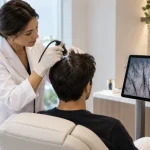
For hair loss, a dermatologist may examine the scalp, evaluate the pattern of thinning, perform a hair-pull test, and review recent illness, weight loss, pregnancy, medications, diet, and family history.
Blood tests may then be ordered if nutritional deficiency, hormonal imbalance, infection, or another medical cause is suspected.
Someone with diffuse shedding and heavy menstrual bleeding, for example, may have a stronger reason to investigate iron status than someone with classic hereditary pattern loss.
A patient with highly restrictive eating habits may warrant broader nutritonal assessment.
Skin findings can provide clues too.
Poor wound healing, unusual dermatitis, pigment changes, fragile nails, oral symptoms, or multiple systemic complaints may justify investigation beyond cosmetic skincare.
Testing works best when there is a reason for each test.
Supplements Should Correct Problems, Not Create Them
The modern beauty market encourages people to supplement first and investigate later.
Dermatology guidance generally favors the opposite approach.
The AAD advises healthy adults to obtain most nutrients through food and use supplements when deficiency or another medical indication has been identified.
This approach reduces several problems.
It limits accidental duplication between multivitamins, beauty gummies, fortified foods, and individual supplements. It also lowers the risk of high-dose selenium, vitamin A, iron, zinc, or other nutrients producing unwanted effects.
Biotin illustrates another issue: supplementation can distort laboratory results and make diagnosis harder.
If you do use supplements, keep a list of everything you take and share it with healthcare professionals before blood testing.
More capsules do not necessarily create healthier skin or denser hair.
Think in Dietary Patterns, Not Individual Pills
Skin and hair rely on dozens of nutrients simultaneously.
Iron works alongside proteins involved in oxygen transport. Vitamin C contributes to collagen formation and improves non-heme iron absorption. Zinc supports tissue repair. Vitamin D participates in immune and epidermal pathways.
Modern reviews of nutrition and the skin barrier increasingly emphasize overall diet rather than treating one nutrient as a universal solution.
Evidence suggests nutrition can influence barrier integrity, cell proliferation, tissue repair, and immune regulation, although specific dietary recommendations for dermatological diseases remain an evolving area.
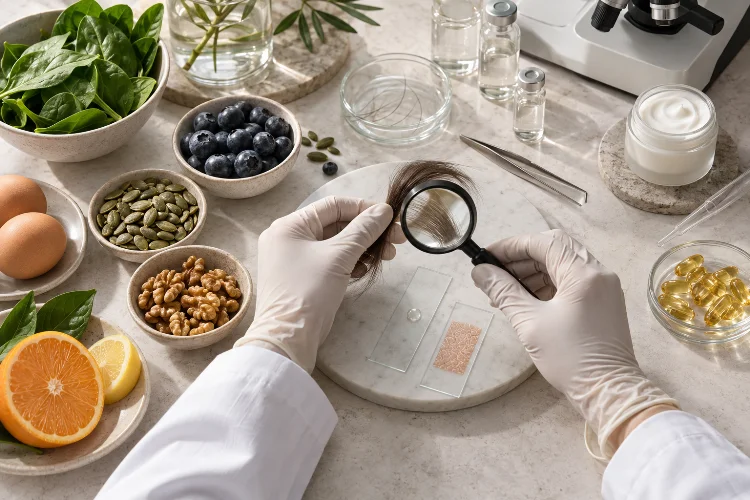
A practical diet therefore includes varied vegetables and fruits, protein-rich foods, whole grains or other nutrient-dense carbohydrates, healthy fats, and reliable sources of minerals.
That sounds less exciting than a new beauty supplement.
Biologically, it makes far more sense.
Advanced micronutrient analysis for skin and hair health is not about finding one vitamin responsible for every breakout, dry patch, or loose hair.
Iron, zinc, vitamin D, vitamin C, biotin, selenium, copper, and vitamin A all participate in processes relevant to skin integrity or follicular biology.
Deficiencies can matter, but excessive intake can matter too – and sometimes produces the exact problem a supplement was supposed to prevent.
Start with diet, symptoms, medical history, and the pattern of skin or hair changes. Use targeted laboratory testing when there is a clinical reason, then correct genuine deficiencies at an appropriate dose.
If shedding is persistent, skin problems are unexplained, or you are already taking several supplements, review them with a doctor, dermatologist, or registered dietitian. The smartest micronutrient strategy is not taking more. It is knowing what your body actually needs.